DesignElectrical Engineering
Our engineers plan for housing fit, clean cable routing, thermal safety and long-term testability. We support full PCBA design, schematic capture and layout so we can help ship real products that work.



Good electrical design isn’t just about the circuit. It’s about knowing how that board will behave inside a housing, under vibration and in a test fixture. We solve with the whole system in mind.


Electrical engineering design
We design printed circuit boards that meet real-world requirements for signal integrity, voltage stability and system performance. Whether it's an analog sensor front end or a high-speed digital interface, we balance layout, noise control, and component selection for reliable operation.
Tools used:
Altium Designer, Fusion 360 (Eagle)
OrCAD, PADS, KiCad
Our boards are built to survive. We account for ingress protection, temperature swings, shock and vibration and long-term reliability from the start. This is the foundation of our work in defense, industrial and mission-critical systems.
We design systems that meet EMI and EMC standards such as MIL-STD-461, FCC Part 15 and IEC 61000. Grounding strategies, trace layout and cable shielding are all considered to improve first-pass test success.
Early-stage testing helps avoid surprises. We simulate interference sources, check layout integrity and assist with issue resolution before lab submission.
We support fast, high-throughput protocols that demand careful attention to signal integrity.
Interfaces we’ve designed include:
- USB 3.1 / 3.2 / SuperSpeed (10G)
- 10G Ethernet
- PCIe
- MIPI / CSI
From power supplies to motor controllers, we design systems that move energy efficiently and safely. We account for thermal behavior, voltage fluctuations and physical routing in every build.
We engineer battery systems for safety and performance. This includes custom LiFePO₄ pack design, protection circuits and BMS logic integrated with onboard diagnostics and system control.
We develop embedded systems on ARM architectures. Designs support bare-metal and embedded Linux operation with attention to fast boot, I/O performance and expansion support.
We’ve supported tamper-resistant electronics, encrypted memory integration, and secure hardware architecture for defense and law enforcement systems. These builds include traceable design elements to meet internal review and external compliance.
We build validation into the hardware. That means test points, programming headers, fixture-friendly layouts, and schematic layout choices that support smooth production, line-side programming and automated testing.
Every unit needs consistent testing. We design electrical interfaces for firmware flashing and traceable validation across builds to support quality assurance and field reliability.
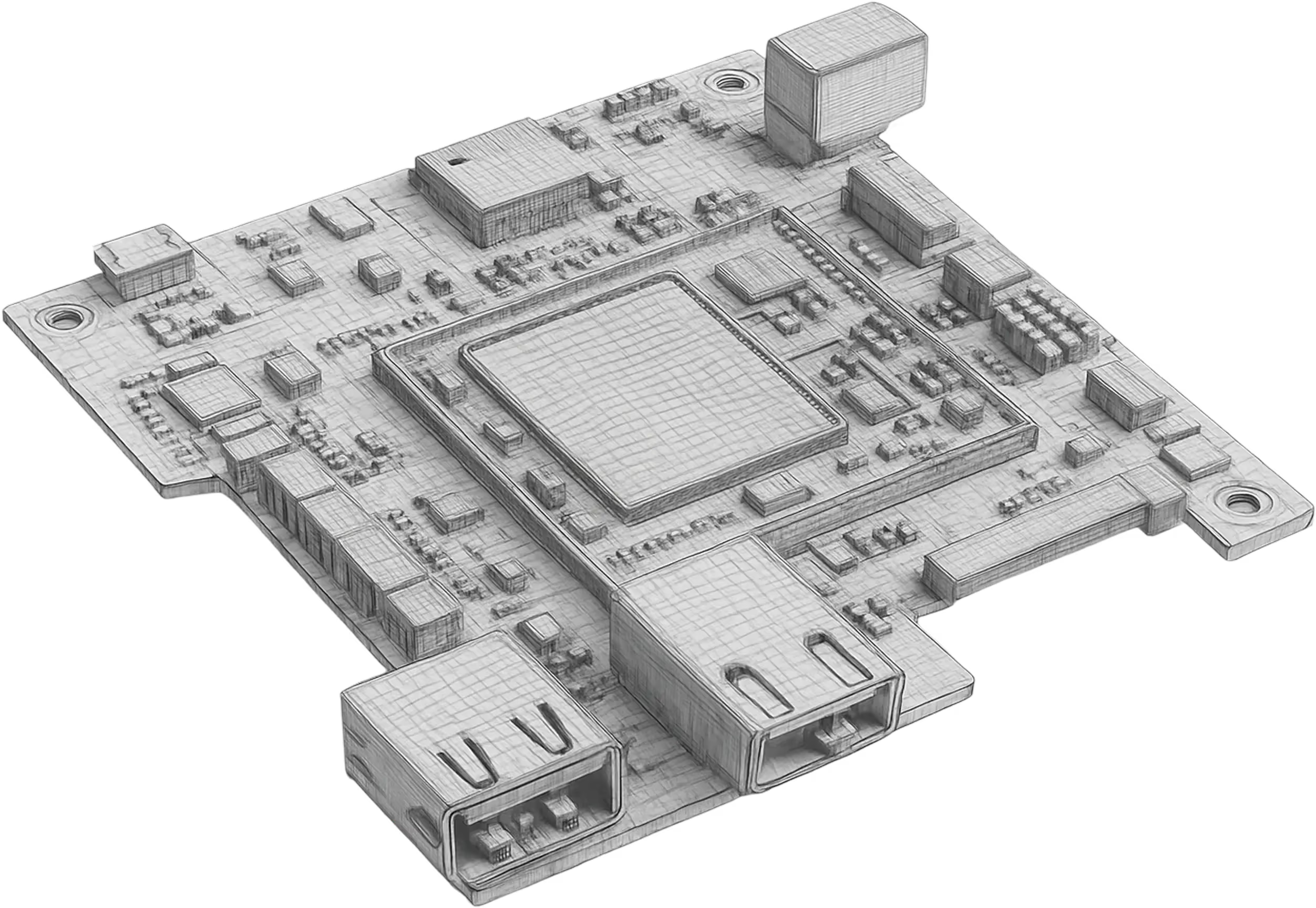
Electrical engineering product design